
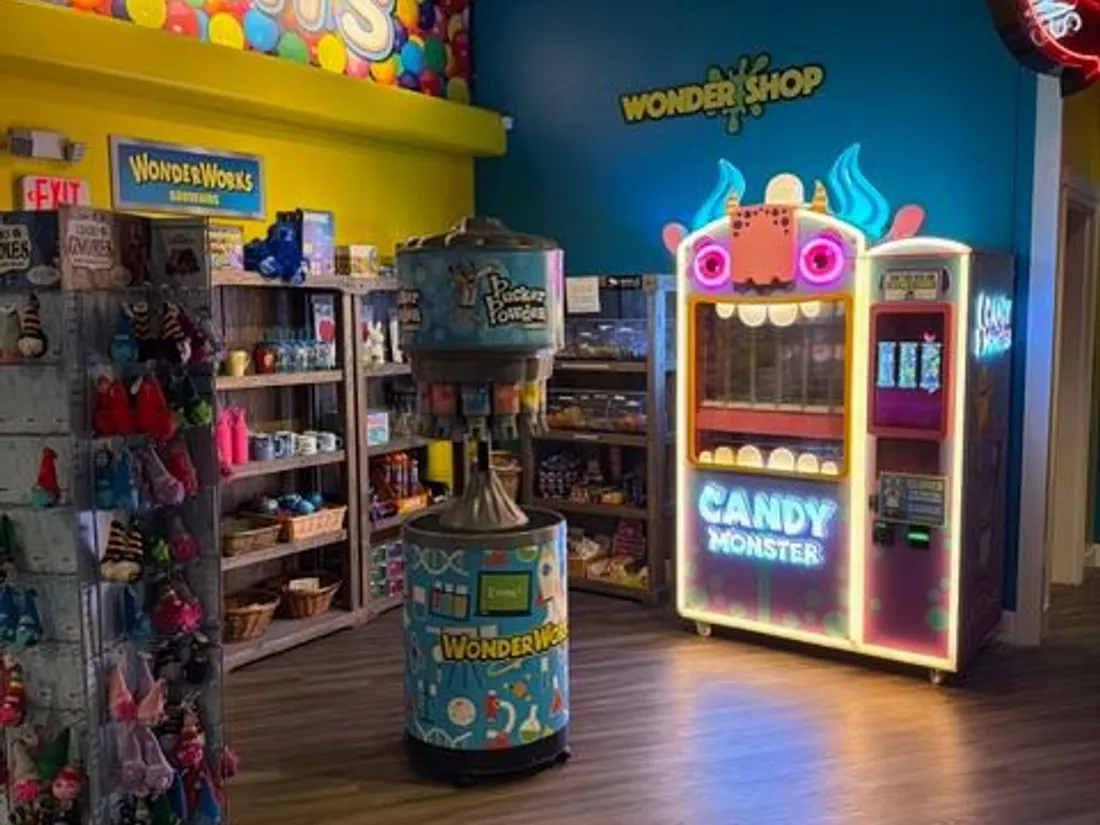
Quick answer: The unique vending machines that earn in Europe are the ones that make something in front of the customer — cotton candy, ice cream, popcorn, balloons, 3D-printed chocolate, custom phone cases. Novelty gets attention; a fresh, made-to-order product at a €4–8 price point is what turns that attention into repeat revenue.
Key takeaways
- Unusual vending machines earn from two things at once: the product and the performance.
- The commercially serious category is robotic machines that manufacture on demand, not machines that dispense odd packaged goods.
- Venues invite these machines because they hold foot traffic — which changes the rent conversation in the operator’s favour.
- Nine robotic machine types are available to European operators today, all CE-marked and 230V native.
- Sweet Robo operators in Europe report roughly €1,500–€3,000 per month per well-placed location.
Search for unique vending machines and you will find a lot of listicles about machines that sell live crabs. Entertaining, but not a business. The machines that actually earn in European venues share one trait: a customer can stand in front of them and watch something being made. Here is the honest list, what each one sells, and where it belongs.
Why “unusual” earns more than “convenient”
A conventional vending machine competes on convenience, which means it competes on price with the nearest shop. A machine that performs competes with nothing.
Three commercial consequences follow:
- A higher ticket. Nobody queues to pay €6 for a packaged chocolate bar. They will happily pay it for a cloud of cotton candy shaped like a flower, spun in front of them.
- Impulse plus repeat. Shape and flavour variety gives children a reason to come back and pick a different one.
- Free marketing. Customers film the robot. That footage advertises the venue, which is why venues negotiate differently for an attraction than for a snack box.
The robotic machines European operators actually run
Each of these makes its product on demand, unattended, with cashless payment and remote monitoring.
| Machine | What it makes | Time per serve | Best venues |
|---|---|---|---|
| Cotton Candy Robot | Fresh cotton candy — 30 shapes, 6 sugar colours | About a minute | FECs, malls, holiday parks |
| Cotton Candy VMP | Same product, countertop footprint | About a minute | Convenience stores, kiosks, small retail |
| Robo Ice Cream | Ice cream cup, topped, sealed, spoon included | About 30 seconds | Promenades, resorts, cinemas |
| PopCart | Fresh popcorn with flavour packets | Under a minute | Cinemas, arcades, bowling |
| Balloon Bot | Sculpted balloon toys | About 60 seconds | Playgrounds, zoos, family parks |
| Candy Monster | Mixed branded sweets in a themed cup | Seconds | Malls, candy stores, cinemas |
| ChocoPrint | 3D-printed chocolate shapes | Minutes | Flagship retail, expos, hotels |
| AI Printer | Custom-printed phone cases | Minutes | Malls, electronics retail, airports |
| Mr. Pop | Lollipops, dispensed with a show | Seconds | High-traffic retail, family venues |
The full range has the specifications for each. What matters when choosing is not which machine is most unusual, but which one matches the venue you can actually secure.
Matching the machine to the venue
The pattern across European installs is consistent:
- Family entertainment centres and indoor playgrounds — cotton candy and balloons. Children are already in celebration mode and parents are already spending.
- Shopping malls — cotton candy, candy, phone cases. Long dwell time and repeat visits.
- Cinemas, bowling and arcades — popcorn and candy. The queue and the treat belong together.
- Holiday parks, resorts and promenades — ice cream and cotton candy, with strong seasonality.
- Convenience stores and small retail — the countertop cotton candy unit, which needs a counter rather than a floor plan.
If you have the venue but not the machine, the locations page covers how that side works.
Where novelty stops being enough
Two honest cautions, because this category does attract bad purchases.
A machine is only as good as its support. Imported novelty machines frequently arrive with no manual, no training and no European parts supply. When one breaks in July, the season is gone. Sweet Robo includes setup, training and support access, and supports EU operators from the Netherlands with representatives in France and Germany.
Novelty without throughput does not pay. A machine that takes four minutes per serve cannot clear a queue at peak. Check the cycle time against the venue’s rush hour before you fall in love with the concept.
Frequently asked questions
What are the most unique vending machines available in Europe?
The most unique vending machines available to European operators are robotic machines that make the product on demand: cotton candy robots, automated ice cream stations, fresh popcorn machines, balloon-sculpting robots, 3D chocolate printers and custom phone-case printers. All of these make the item in front of the customer rather than dispensing something pre-packaged, which is what separates them commercially from conventional vending.
Do unusual vending machines make more money than normal ones?
Generally yes, for two reasons. The ticket is higher — €4–8 for a fresh treat versus €1–3 for a packaged snack — and the ingredient cost is lower, since cotton candy is spun from a few cents of sugar. The machine also draws its own audience, which conventional machines do not. Sweet Robo operators report roughly €1,500–€3,000 per month per well-placed location.
Which unique vending machine is best for a family entertainment centre?
Cotton candy and balloons perform best in family entertainment centres and indoor playgrounds. Both sell to children in celebration mode, both are visually dramatic, and both have high shape variety, which drives repeat purchases across a single visit or a season pass.
Are novelty vending machines legal to operate in the EU?
Yes, provided the machine meets EU requirements. Ask for CE marking with a declaration of conformity, native 230V/50Hz operation, and food-contact compliance for any machine handling food. Local rules on placement and food handling vary by country and venue, so confirm with the venue and your local authority.
What should I check before buying an unusual vending machine?
Check cycle time against the venue’s peak, where spare parts ship from and how fast, whether setup and training are included, whether the machine is CE-marked and 230V native, and whether the supplier helps with placement. A cheaper machine with no European support is usually the more expensive purchase.
Related reading: Smart vending machines in Europe · What a vending machine costs in Europe · Cotton candy vending machine buyer’s guide
Written by the Sweet Robo Europe team — 200+ machines shipped to Europe in the last 12 months, across 15+ countries, supported from the Netherlands. Talk to the EU team for a euro quote.