Quick answer: A smart vending machine is a connected machine that takes cashless payment, reports its own sales and stock in real time, and can be managed remotely. An AI vending machine goes further, using software to guide the sale or personalise it. A robotic vending machine is the third step: it makes the product on demand instead of dropping a packaged one.
Key takeaways
- “Smart,” “AI” and “robotic” are three different things, and only one of them changes what the customer actually receives.
- The features that pay for themselves in Europe are cashless payment, remote stock and sales telemetry, and error alerts — not novelty AI.
- Robotic machines add a second revenue driver that software cannot: the show. Customers stop, film and share.
- Sweet Robo’s European operators report roughly €1,500–€3,000 per month per well-placed machine, with a few hours of upkeep per week.
- Sweet Robo has shipped 200+ machines to Europe in the last 12 months, across 15+ countries, supported from the Netherlands.
Search interest in smart vending machines across Europe now runs several times higher than interest in the machines themselves, and “AI vending machine” is climbing fast behind it. The words get used loosely by every supplier, which makes them almost useless when you are actually choosing equipment. Here is what each term means in practice, and which parts of it matter to someone buying a machine to operate.
What makes a vending machine “smart”
A smart vending machine is a connected machine. The definition is boring but useful: it accepts cashless payment, it knows what is inside it, and it tells you both without you being there.
In practice that means four things:
- Cashless payment — card, contactless and phone wallets, which in most European markets now outsell coins by a wide margin at impulse price points.
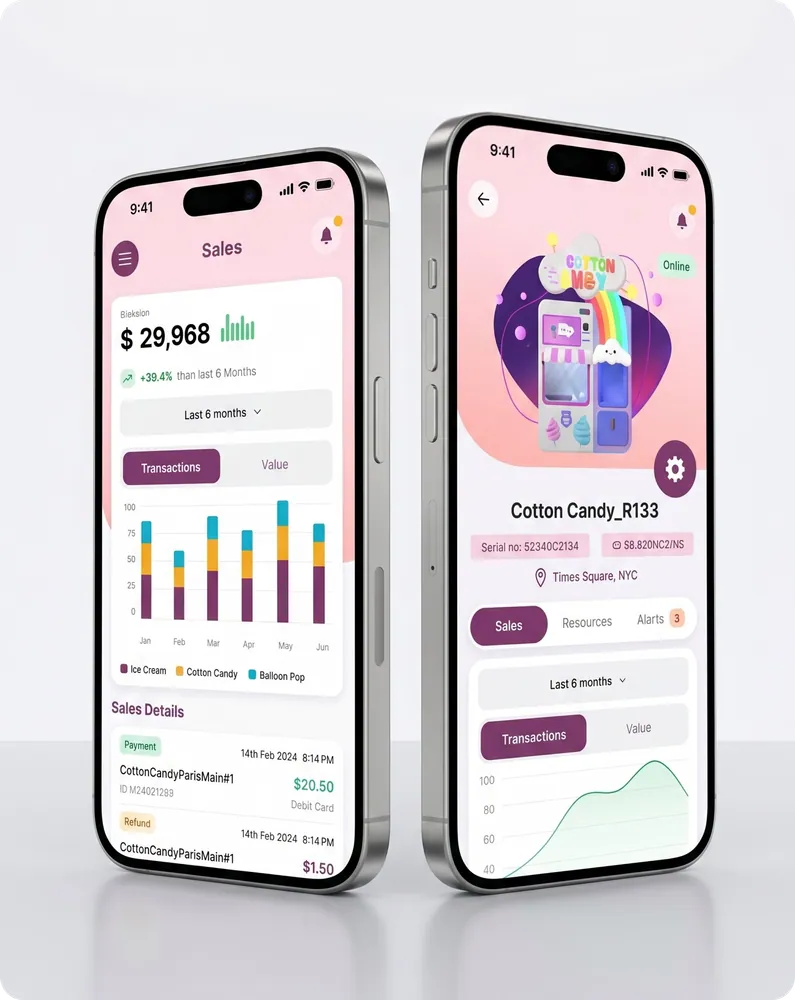
- Telemetry — live sales and stock levels pushed to a dashboard or phone app.
- Remote management — price changes, promotions and shutdowns without a site visit.
- Fault alerts — the machine tells you it is jammed, empty or offline before a customer does.
None of that is exotic in 2026, and none of it is AI. It is the baseline you should refuse to buy without, because every one of those features removes a drive to the machine.
What an “AI vending machine” usually means
AI vending machine is the loosest of the three terms. In current products it usually covers one of three things: computer vision that recognises what a customer picked up, demand forecasting that tells the operator what to restock, or a guided on-screen experience that helps the customer design or choose their product.
The honest framing: AI in vending is mostly an operator-side tool. It can reduce the number of pointless restocking trips and flag which locations under-perform. What it rarely does is change what the customer walks away holding — which is where the actual margin lives.
Robotic vending: the part customers can see
A robotic vending machine is a different category. Instead of releasing a pre-packaged item, it manufactures the product in front of the customer.
Sweet Robo’s cotton candy vending machine spins the cloud live, shapes it into one of 30 built-in shapes across 6 sugar colours, and hands it over — a few cents of sugar sold for €4–8. The ice cream vending machine dispenses, tops, seals and spoons a cup in about 30 seconds. The candy machine fills a themed cup with a mix of branded sweets, and the balloon machine sculpts a balloon toy in about 60 seconds.
That difference matters commercially, not just visually. A packaged-snack machine competes on price with the shop next door. A machine that performs competes with nothing, because the performance is the product.
Smart vs AI vs robotic: the practical comparison
| Smart vending machine | AI vending machine | Robotic vending machine | |
|---|---|---|---|
| Core capability | Connected, cashless, remote-managed | Software that predicts or guides | Makes the product on demand |
| What the customer gets | A packaged item | A packaged item, chosen differently | A fresh item made in front of them |
| Main benefit | Fewer site visits | Better restocking decisions | Higher price point + attraction value |
| Typical ticket | €1–3 | €1–3 | €4–8 |
| Staff needed | None | None | None |
Read across the bottom two rows and the commercial argument becomes obvious. Smart and AI features reduce your costs. Robotics raises your revenue per customer. The strongest setup has all three: a robotic machine that is also connected and remotely managed, which is how Sweet Robo’s European machines ship.
What to insist on when buying in Europe
Whatever a supplier calls the machine, hold it to the same checklist:
- CE marking with a declaration of conformity — the document, not just the sticker.
- Native 230V / 50Hz operation. Converted 110V machines add failure points and cost.
- A telemetry app you can actually see before buying. Ask for a live demo of the dashboard, not a screenshot.
- European support and spare parts. A clever machine that waits three weeks for a part from overseas is not a smart machine. Sweet Robo supports EU operators from the Netherlands, with representatives in France and Germany.
- GDPR-ready software. If the machine collects any customer data, that obligation is yours as the operator.
Does the technology change the earnings?
Partly. Connectivity protects revenue you already earn — an empty machine that tells you it is empty gets refilled the same day instead of the next week. Robotics is what raises the ceiling, because it moves the ticket from snack money to treat money and gives venues a reason to want you there.
Sweet Robo operators across Europe report roughly €1,500–€3,000 per month per well-placed location, on a few hours of upkeep per week. Results depend on foot traffic, season and venue type — the vending machine business page walks through the payback maths, and what a machine does for your location covers the venue side.
Frequently asked questions
What is a smart vending machine?
A smart vending machine is a connected vending machine that accepts cashless payment, tracks its own stock and sales in real time, and can be monitored and managed remotely by the operator. Modern smart machines send alerts when they are low, jammed or offline, which removes most routine site visits. Connectivity is now the baseline expectation in Europe rather than a premium feature.
What is the difference between a smart vending machine and an AI vending machine?
A smart vending machine is about connectivity: cashless payment, remote monitoring and telemetry. An AI vending machine adds software intelligence on top — computer vision, demand forecasting, or a guided on-screen experience. In practice most AI features help the operator make better restocking and pricing decisions rather than changing what the customer receives.
Are robotic vending machines the same as smart vending machines?
No. A robotic vending machine makes the product on demand — spinning cotton candy, assembling an ice cream, sculpting a balloon — instead of dispensing a pre-packaged item. Most robotic machines are also smart machines, because they are connected and remotely managed, but a smart machine is not necessarily robotic.
Do smart vending machines need staff on site?
No. Sweet Robo machines are fully automated and require no on-site staff. The operator’s work is refilling consumables and basic cleaning, typically a few hours per week, with stock levels and faults visible remotely so visits can be planned rather than guessed.
Which smart features are actually worth paying for?
Cashless payment, live stock and sales telemetry, and automatic fault alerts. Those three directly reduce the number of trips you make and the revenue you lose to an unnoticed outage. Novelty AI features are worth far less to a small operator than a machine that reliably tells you when it is empty.
Related reading: How to start a vending machine business in Europe · What a vending machine costs in Europe · Unique vending machines that actually earn
Written by the Sweet Robo Europe team — 200+ machines shipped to Europe in the last 12 months, across 15+ countries, supported from the Netherlands. Talk to the EU team for a euro quote.